Combating extreme heat
If you can, please donate to the Country Fire Authority (CFA) who rely on volunteers to fight fires in Rural Victoria, Australia. Donate here.
The world is getting hotter as the climate changes. Extreme heat days are becoming more frequent and intense for communities around the globe.
The heat makes us more irritable, tired, and slower. This significantly affects our ability to work, learn, and positively interact with others.
Our vulnerable populations are more exposed and susceptible to extreme heat. The World Health Organization (WHO) projects that from 2030 that 38,000 people will die each year from exposure to extreme heat!
It’s necessary that we respond to the growing exposure to extreme heat by building communities and spaces to be resilient. What follows is a case for building public infrastructure that creates climate resiliency within our communities.
It is not a one size fits all solution.
Different places around the world have adapted to heat in different ways based on their resources, climate, people, and culture. Some communities embed heat into their culture. Others shield from it. Understanding how communities currently resist extreme heat can give us solutions to replicate, modify, and adapt for our own communities.
PHNOM PENH, CAMBODIA
When public infrastructure does not provide a solution then behaviours must change.
In Cambodia there is little climate-resilient built environment compared to its neighbours. They have adapted to the heat by changing behaviours and culture when it’s hot. In my week staying in Phnom Penh last year the daily temperature exceeded 35 degrees every day. It was extremely difficult to do anything during the day without retreating to air conditioning and closing the blinds.
Outside there was little movement during the day. People in the street was a rarity - only there if they had to be. Cars and bikes were scarce.
I found that most activities were done mostly at night.
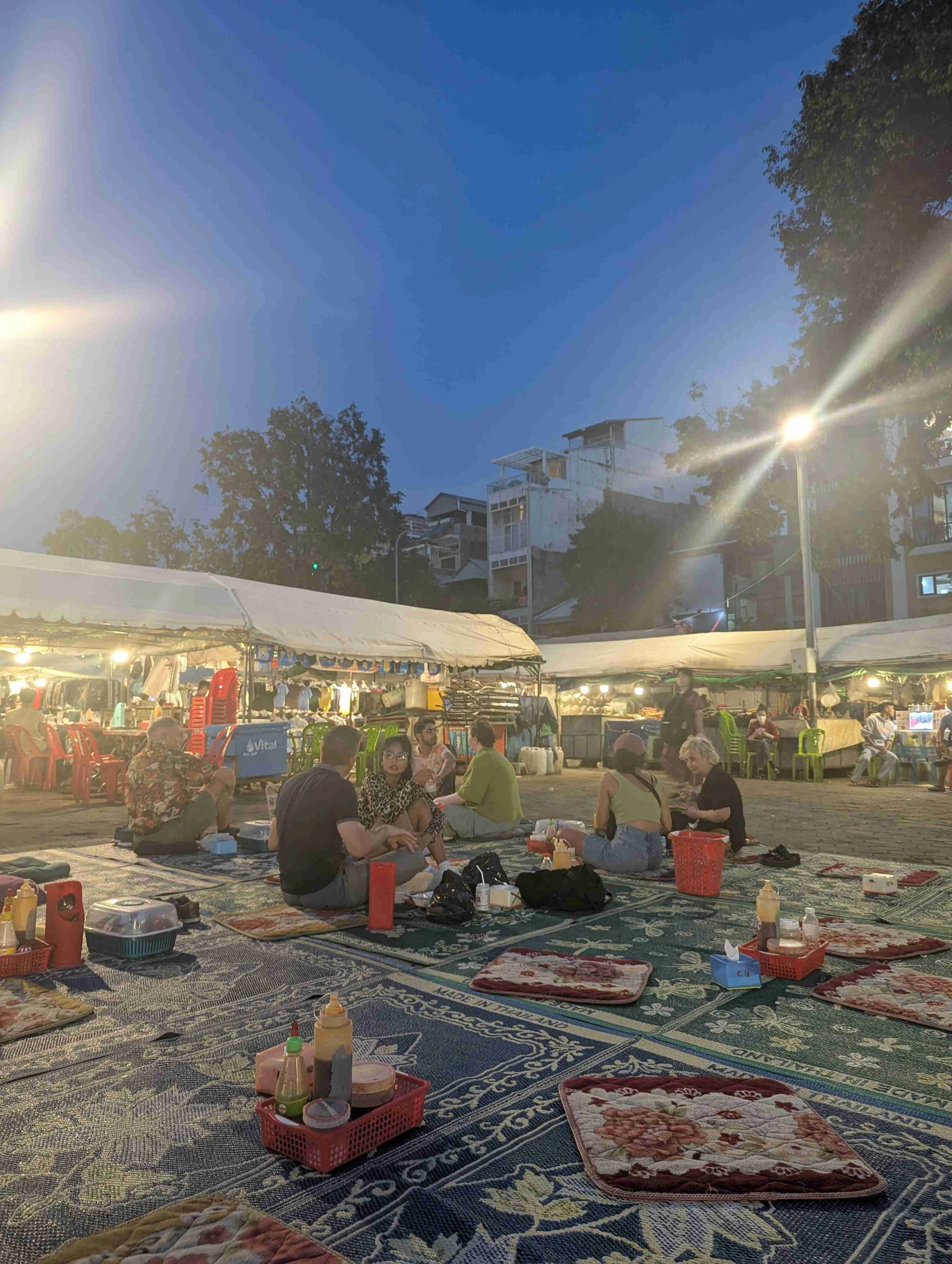
The markets opened at night for the people to enjoy and congregate.
The markets did not open in the morning like other countries but in the evenings once the sun went down. People bought and sold produce, fish, meats, and drinks at night.
Outdoor sports started at night under artificial lights.
What I found was the community responded to the extreme heat and lack of supporting infrastructure by changing their behaviors. Economic and social interactions shifted into the nighttime as that is when going outside was more bearable.
When public infrastructure cannot provide a continuity of services in the face of climate events then communities are forced to respond themselves.
MELBOURNE, AUSTRALIA
Investing in green infrastructure can provide communities with continuity of culture and social interactions. Natural solutions are cost effective and sustainable over sparsely populated areas.
Living in Melbourne over the last week has shown me how Victorians respond to extreme heat. Temperatures exceeded 43 degrees in Melbourne as multiple, severe bushfires ignited across the state.
As of writing this, 400,000 hectares have been burnt, 1000 agricultural properties affected, and more than 150 homes lost. A person has died. The Victorian Government has called a State of Disaster.
In Melbourne, where 82% of Victorians live, they have been fortunate to not experience the bushfires directly, but they have been exposed to the chronic effects of extreme heat and air pollution.
Melbournians adapt to the heat. They change how they interact with their community in response to hotter days.
Opening hours changed where businesses close early in the day, open later in the evening, or close all together.
People stayed home where they can.
Greetings were focused on the heat with people are saying “stay hydrated” or “stay cool”.
The City designated cool spaces for people to access.
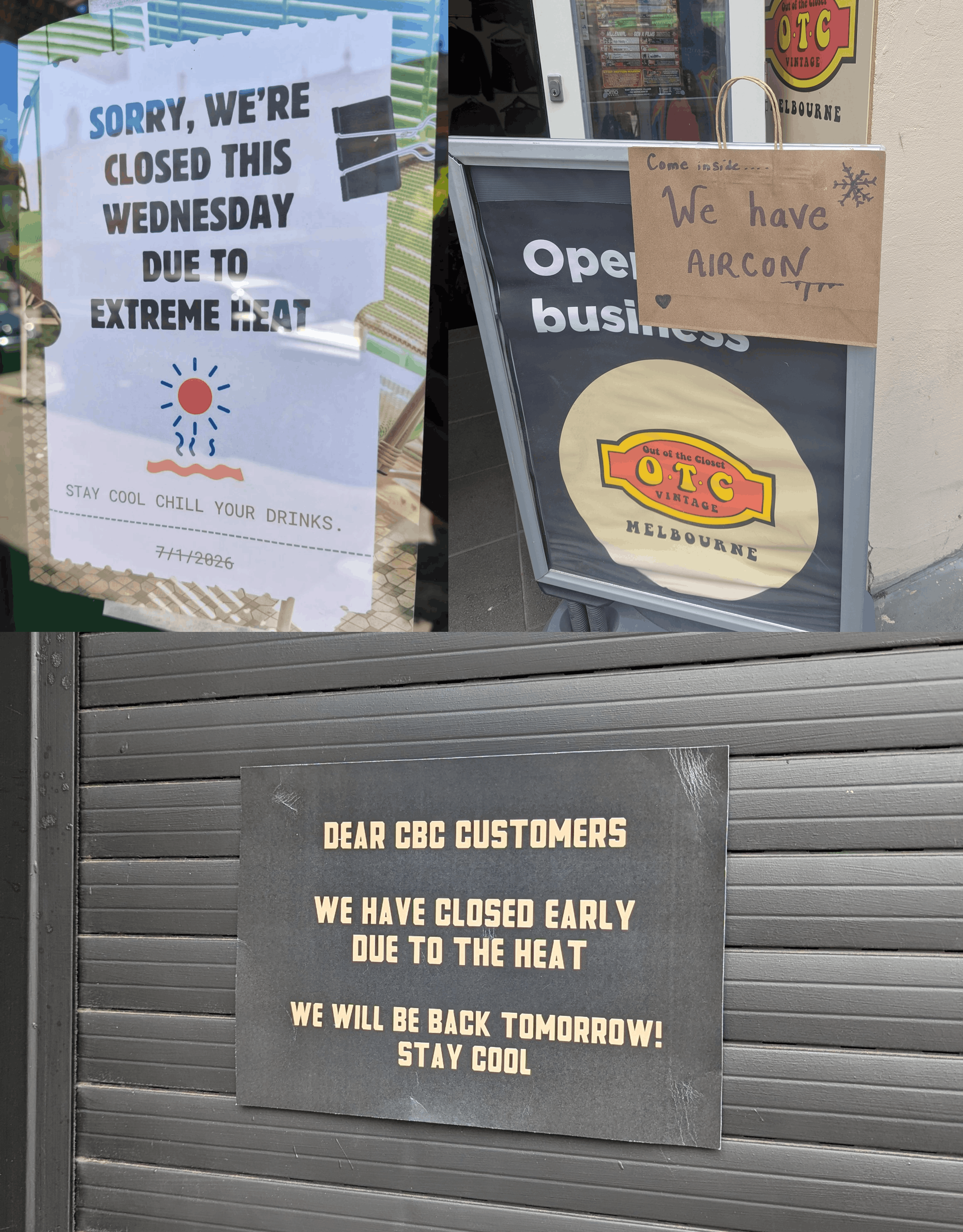
Melbourne businesses responding to the January 2026 heatwave.
This is not a recent phenomenon - Australia is internationally notorious for its sunburnt country and blistering heat.
Although, as extreme heat days become more frequent, the way in which people interact may be forced to change more permanently. What infrastructure choices are being made to combat the effects of extreme heat?
The City of Melbourne have taken action to reduce its urban heat island effect through increasing its canopy cover.
Canopy cover reflects the suns heat and prevents it from being absorbed into the built environment. This reduces the amount of heat being radiated on streets, pathways, and buildings. This cooling effect can be the difference between staying inside in the air conditioning all day and walking to your local shops. The importance of social interactions - especially for vulnerable people - cannot be understated for a community to thrive.
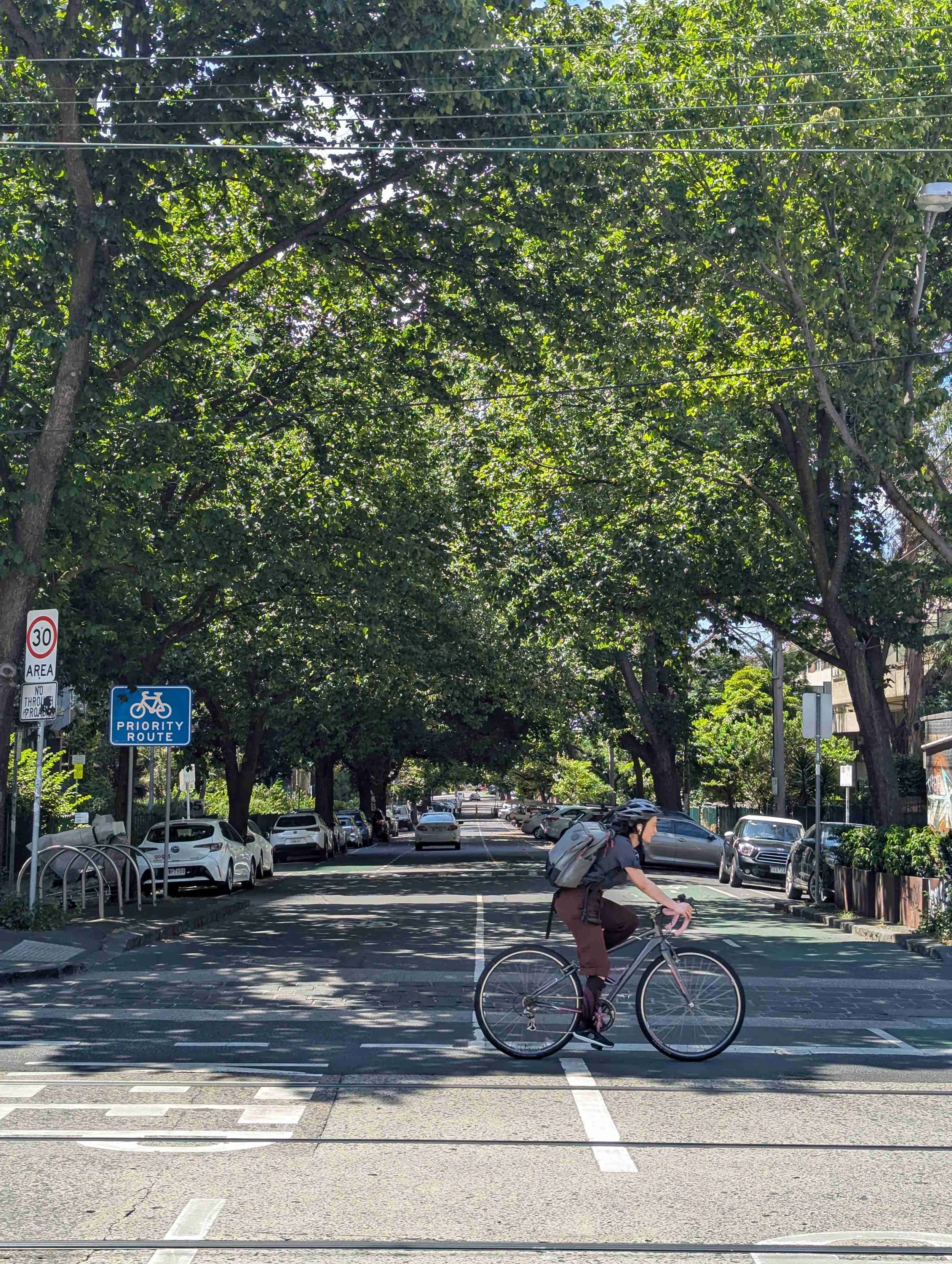
Green canopies covering the built environment reduces the heat island effect and help people stay cool and minimise disruption to their daily lives.
The City aims to increase its canopy cover to 40% by 2040. Using tree canopies and other greenery to block out heat is a great example of embedding natural solutions into the built environment. Canopy cover has many benefits.
Cheaper over the longer term compared to other constructed solutions.
Supports the surrounding flora and fauna ecology.
Improves mental and social wellbeing.
The downside is it takes time to build a solid canopy. It’s better to start now rather than later with these solutions. Complimenting with other solutions can also build robustness in resisting extreme heat (more on that later).
Melbourne is taking the natural solution approach, in this case, that can be applied across a large area where the population is not large or concentrated enough for large, constructed solutions. Remember: not one size fits all.
ABU DHABI, UNITED ARAB EMIRATES
Smart and simple building design can improve climate resiliency within spaces.
The UAE is a desert climate. It has less than 100mm of annual rainfall. Hot summers and humidity from the Persian Gulf make the heat unbearable. Cars are the primary transport as distances from places and the heat make it dangerous to walk.
Due to leveraging their large oil reserves the UAE is extremely wealthy. Their built environment is therefore vast and effectively shields most of the population from extreme heat.
In a place where greenery is sparce, natural solutions are not always the most practical or sustainable. Other climate hazards such as water stress can significantly affect the ability to maintain lush greenery to obtain the cooling benefits. Therefore, the UAE rely on buildings and undercover spaces to provide well-regulated climates for people to occupy.
Well-designed buildings are critical to maintain adequate cooling as extreme temperatures become higher and more frequent. A building’s envelope (the barrier between inside and outside) is extremely important to reduce leakage of conditioned air out of the buildings and into the desert.
Effective design can be simple. Facade shape, undercrofts, and window tints are examples of passive measures.
The Abu Dhabi International Airport uses simple design choices to create an environment shielded from the elements. Solar panels are used in the car park as shade. Entry and exit doors are double-sliding doors to maintain indoor temperatures (the video below exhibits on how they work).
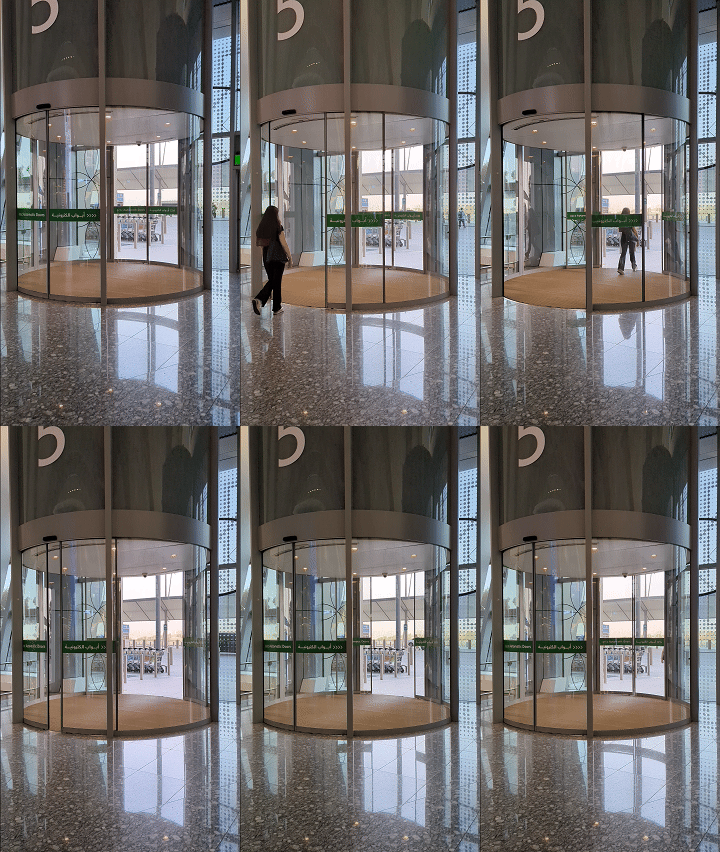
A double-sliding door reduces leakage of cool air.
Simple solutions can heavily reduce construction and operating costs whilst providing an effective retreat from the extreme heat.
Primarily focusing on indoor solutions can be energy intensive as temperate is controlled through mechanical systems. Although by making deliberate design choices, such energy demand can be reduced.
BANGKOK, THAILAND
Interconnected solutions strengthen communities by providing consistent services across changing weather and climate events.
A city of 11 million people. Bangkok is home to a staggering range of climate hazards. Vehicle emissions, crop burning, and manufacturing contribute to and exacerbate poor air quality. Monsoon rains bring large and quick downpours, flooding the Chao Phraya River and surrounding streets. The hot season brings days above 30 degrees regularly.
With such high exposure to varying climate hazards year-round, it’s important that Bangkok’s infrastructure can handle a range of climate events.
A great example of building with interrelated climate resilience is the Bangkok Mass Transit System (BTS) Skywalks.
The BTS is the city’s elevated rapid transit system that carries more than 700 thousand people every day to their destination. The Skywalks are the elevated pedestrian walkways that connect BTS stations and surrounding buildings.
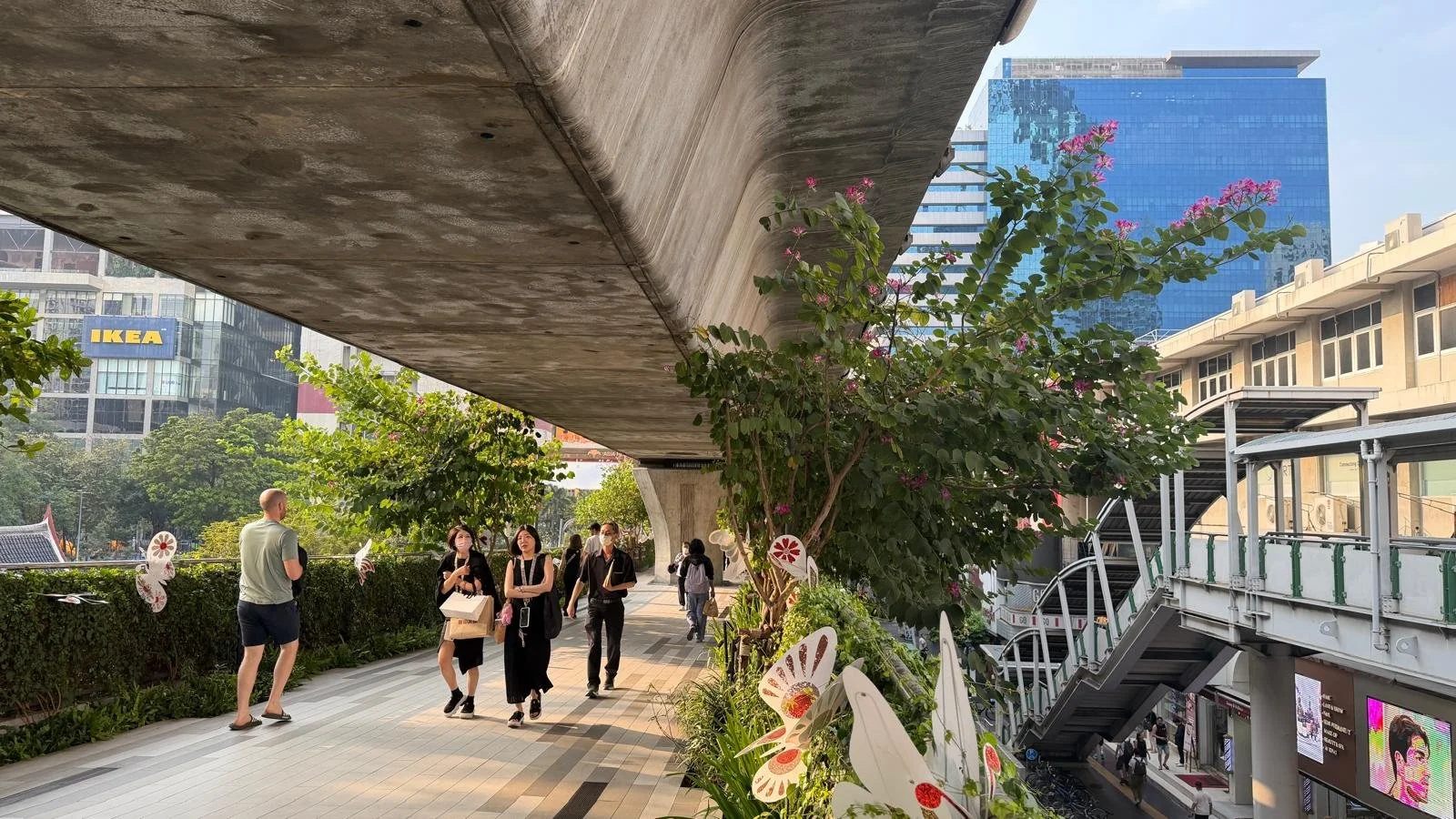
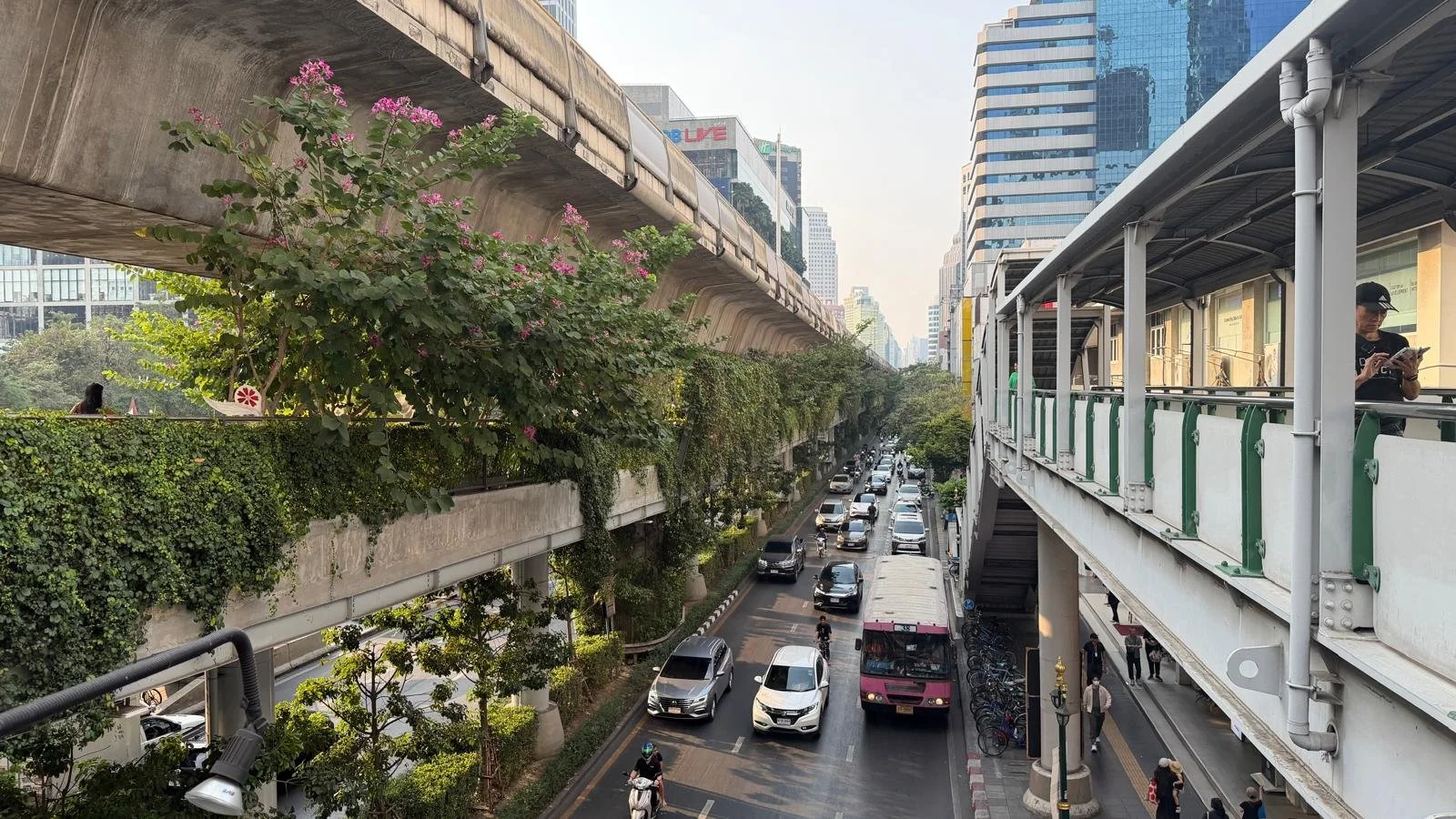
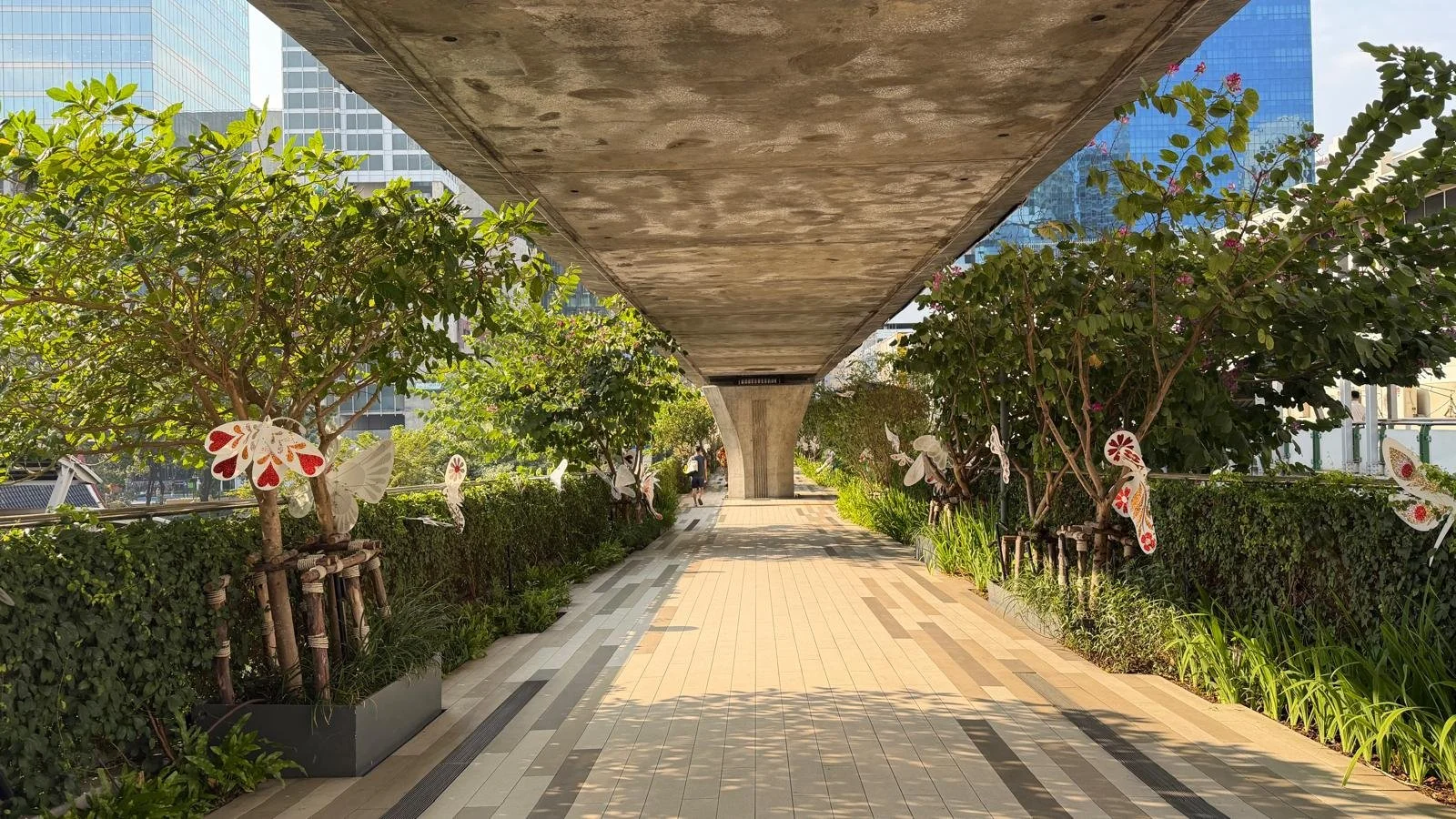
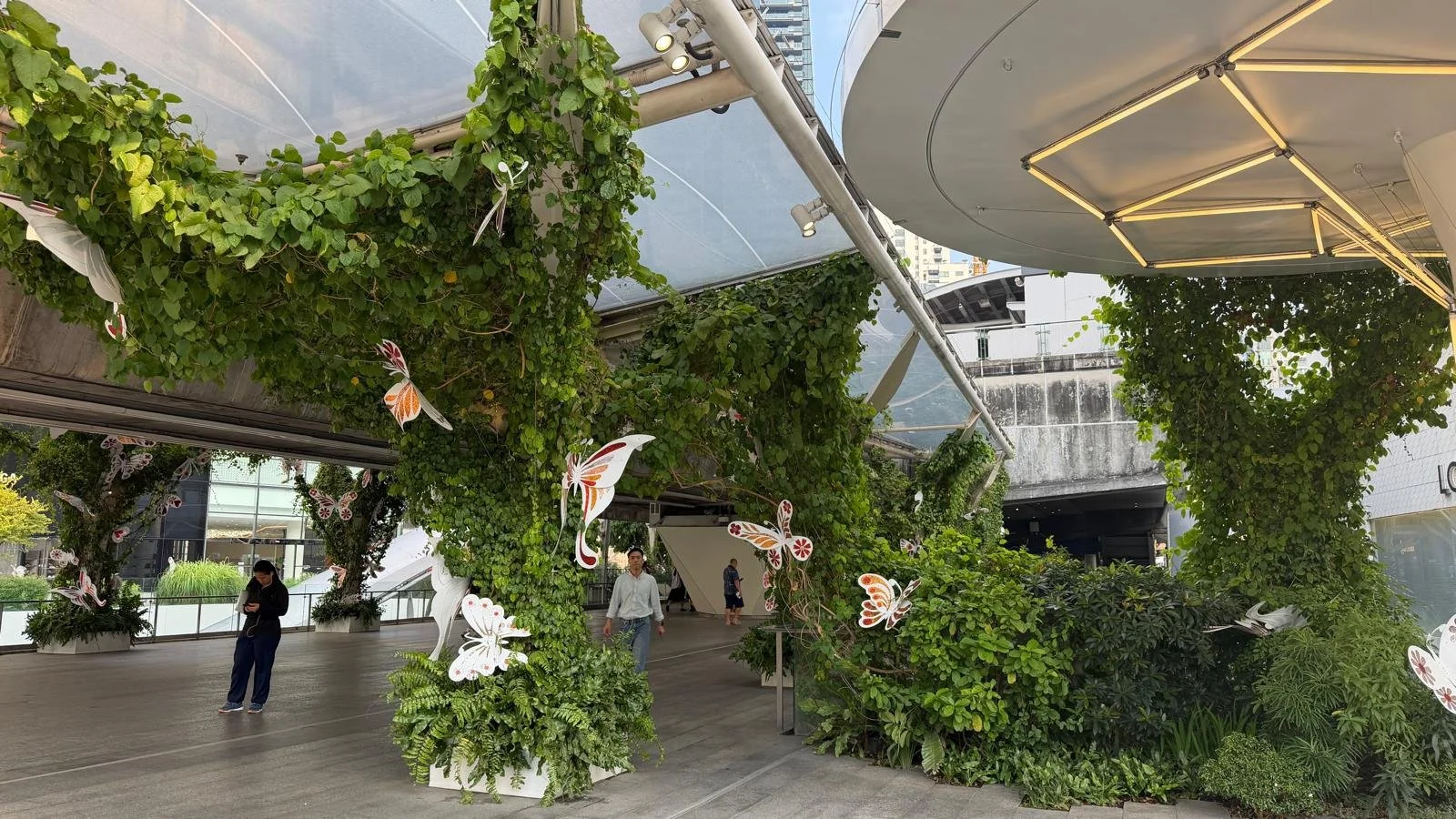
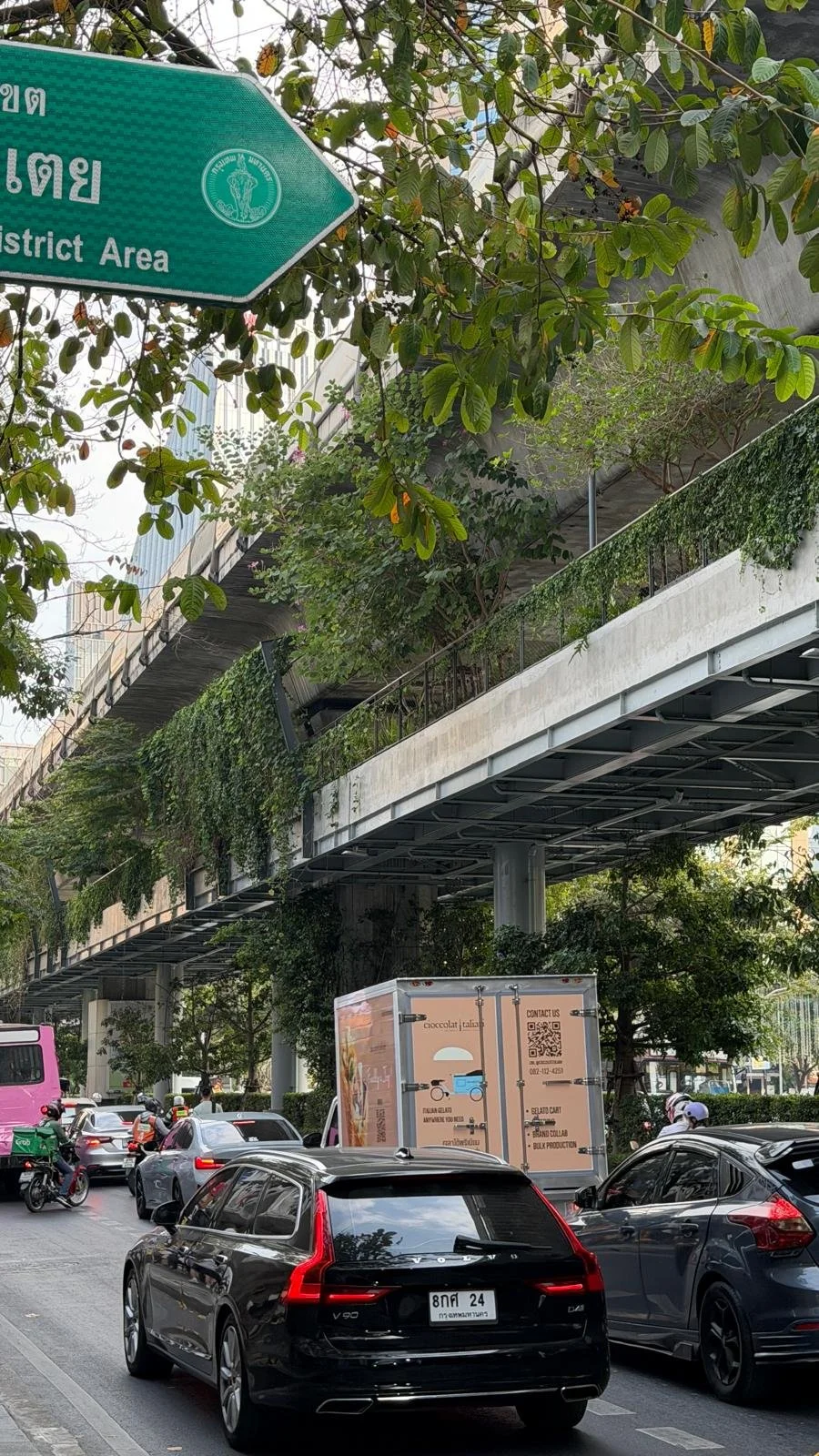
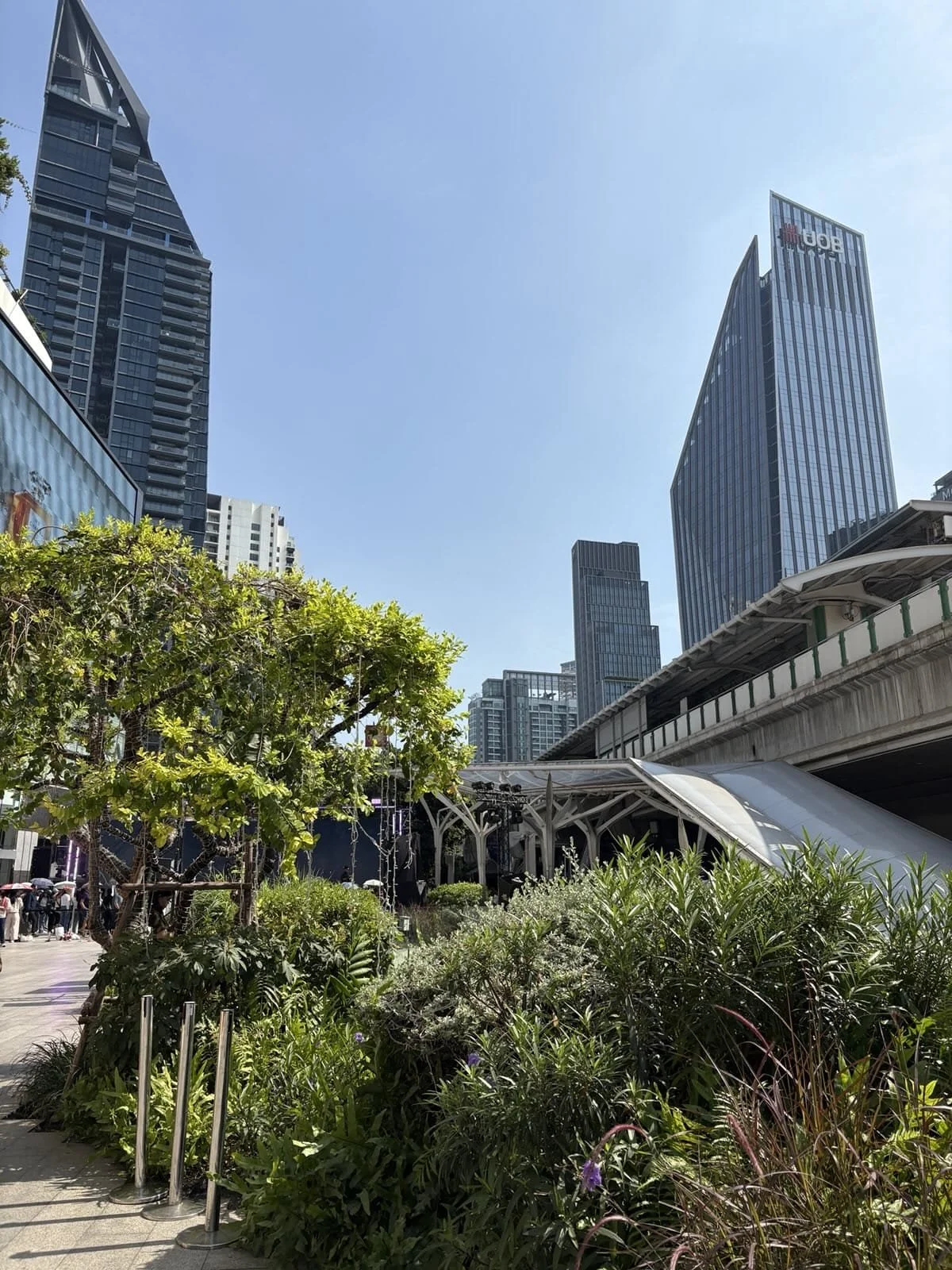
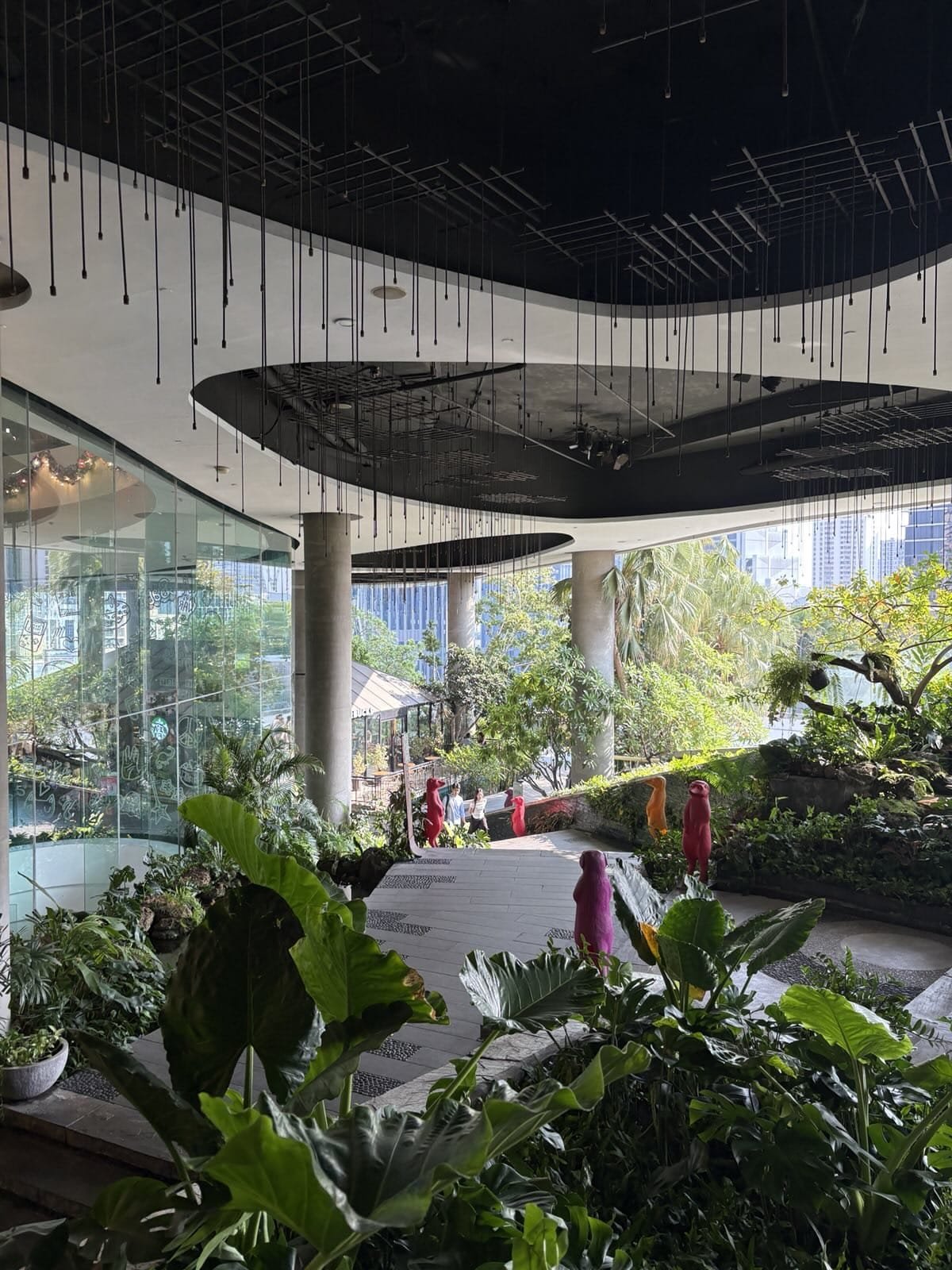
The major benefits of the Skywalks are:
Direct routes between BTS stations and destinations which reduce extreme weather exposure.
Surrounding greenery and the railway structures shield pedestrians from the heat and rain.
Accessible and efficient public transport reduces the need and use of vehicles which relieves traffic congestion and air pollution.
Walkways are raised above the street which prevents flooding.
Separating people and busy roads increases pedestrian safety.
Bangkok have shown that public infrastructure can meet a range of service demands without compromising. In a single infrastructure solution, air pollution is reduced, fast transport is more accessible, and people are shielded from extreme heat, flooding, and intense rainfall.
CONCLUSION
Resilient communities keep continuity of services during times of extreme weather events. This requires having the infrastructure or changing culture and habits that are less affected by extreme weather events.
When public infrastructure cannot provide a continuity of services in the face of climate events then communities are forced to respond themselves.
Adapting to climate change can be done in different ways. There is no right solution, just one that strengthens communities and instills continuity in their way of life.
Natural solutions can reduce the urban heat effect. These are generally cost effective and sustainable with a range of secondary benefits than heat reduction.
Extreme heat is an insidious killer, but there are solutions for communities to effectively stay cool. We can learn, replicate, and adapt what others have done to best suit how we need to protect ourselves and our cities from extreme heat in ways that suit us.
It’s about understanding what other climate hazards are at play. Starting with these questions can form a direction in what solutions best suit you and your community.
How can the surrounding natural environment be embedded into communities?
What do communities need to stay cool and keep continuity in how they live?
What is your community already doing well that can be amplified?
What resources are available?
Further Reading
Cities and Climate Action World Cities Report 2024 | UN-Habitat
Cambodia Climate Risk Profile | World Bank